

What Do Wig and Hair Extension Color Numbers Mean?
A Simple Visual Guide to #1B, #613, Gray Blends, and More
Have you ever shopped for a wig or human hair extensions and wondered what #1B, #2, #27, or #613 actually means?
These labels describe color—not hair length, quality, or texture. Understanding a few familiar color families makes comparing shades and explaining what you want much easier.
How Do Wig Color Numbers Work?
Salon hair-color formulas often combine a depth level and a tone using numbers, decimals, slashes, or letters. Traditional wig and extension codes work more like shade labels.
Among basic dark colors, #1, #1B, #2, #4, and #6 generally become lighter. But higher numbers do not always mean lighter hair. Blonde, auburn, gray, and mixed colors do not share one continuous brightness scale.
#613, for example, is a familiar blonde code—not “level 613.”
Color names and formulas can also vary between suppliers and collections. Use the number as a starting point, then check the actual swatch.
Black and Brown: Small Differences, Different Effects
Small differences between black and brown shades can change how soft, deep, or warm your finished look feels.
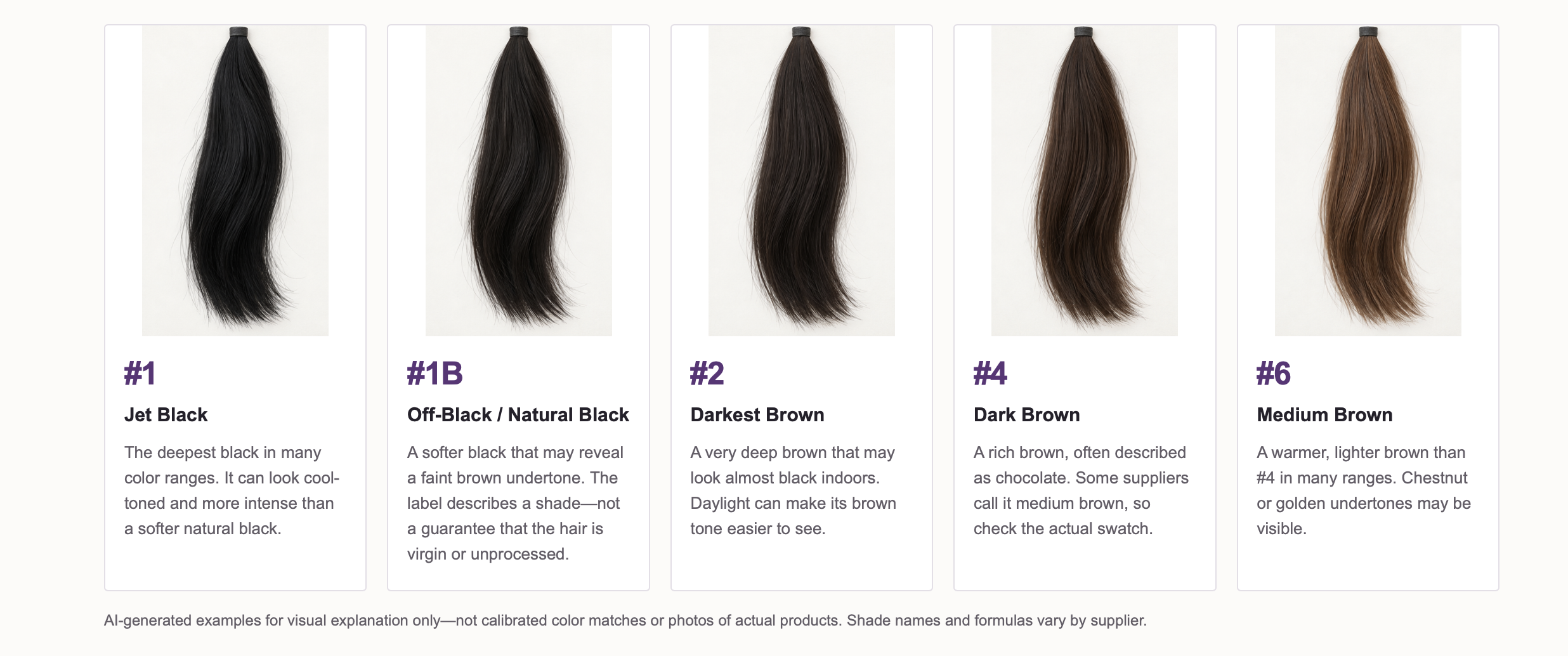
A simple comparison: #1 gives a deeper, more solid black impression. #1B is a softer off-black. #2 brings a little more visible brown. If you are choosing between #1, #1B, and #2, look at the samples together in indirect daylight.
None is the “correct” choice for every Black woman—your natural hair and the look you enjoy matter more than a category.
Blonde and Auburn: Look at Warmth, Too
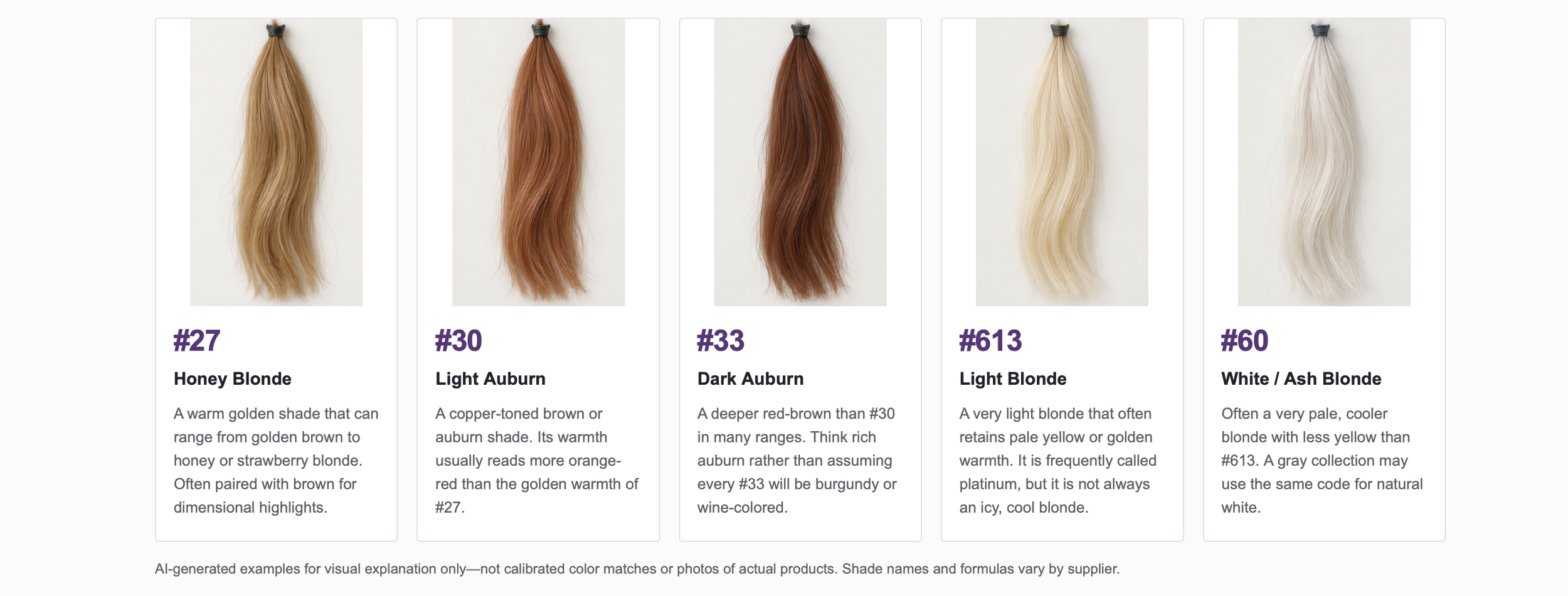
Two shades can have similar brightness but very different undertones. Honey brings golden warmth, auburn brings red or copper, and pale ash blonde has a cooler impression.
Why Is #613 So Familiar?
In human hair products, #613 is commonly a pre-lightened base used for custom blondes, toners, and fashion colors. It is not automatically a finished icy platinum. Additional processing should follow the seller’s guidance and a professional assessment of the hair’s condition.
Mixed Colors: How the Shades Are Arranged
Wigs and extensions often combine shades to create dimension. Letters and slashes may help explain how those colors are arranged.

P commonly refers to a piano or highlighted blend. T can mean tipped, two-tone, or a related rooted arrangement, depending on the seller. A slash simply tells you multiple shades are involved; it does not, by itself, prove the hair is ombré.
For example, 1B/30 can describe dark hair mixed with auburn, while 4/27 combines brown and honey blonde. Always check the full description and photo to see whether the shades are blended, highlighted, or arranged from root to tip.
Gray, Silver, and Salt-and-Pepper Hair Colors
Gray deserves its own place in the hair-color conversation.
You may want to keep a mostly dark look with a few silver strands, match your natural salt-and-pepper pattern, or enjoy a brighter white style.
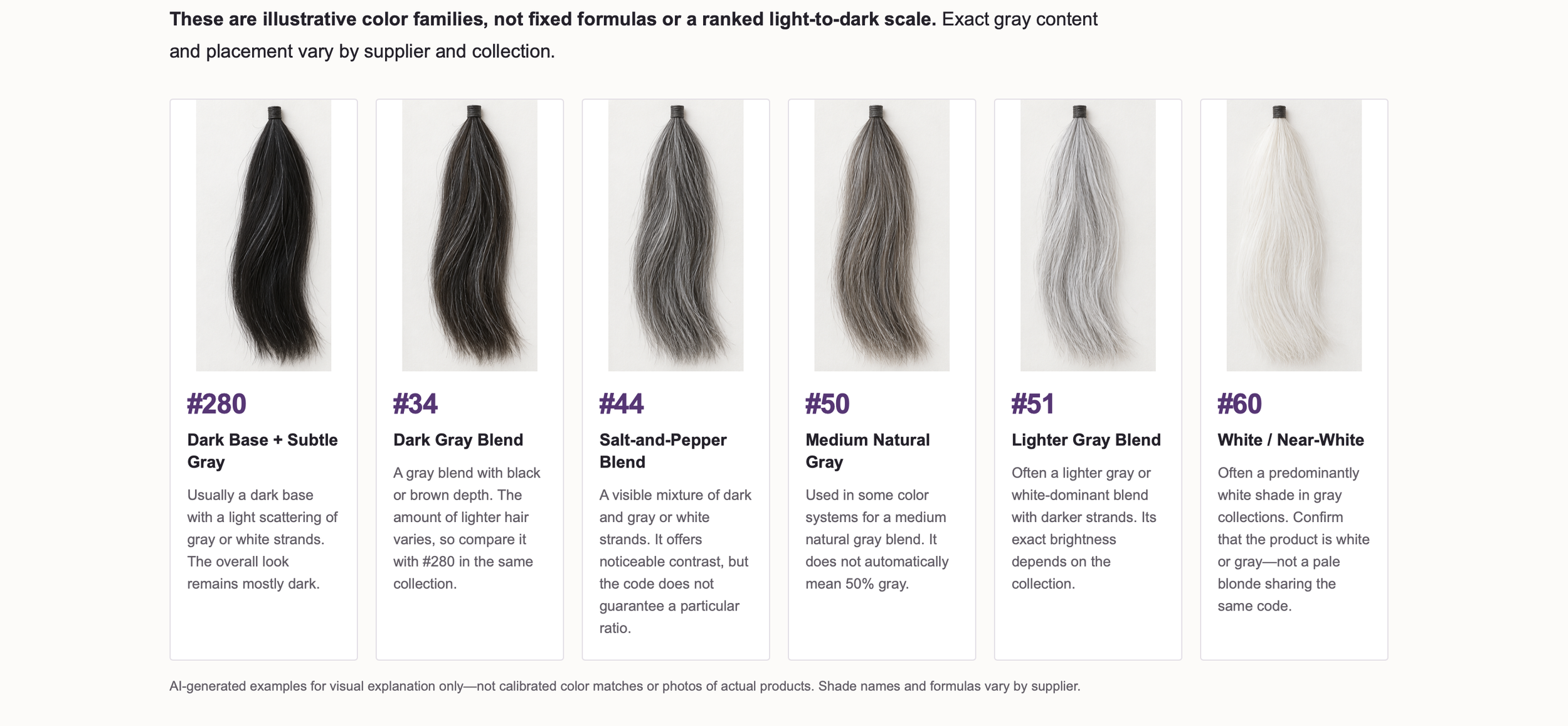
A salt-and-pepper blend combines darker hair—the “pepper”—with white or gray strands—the “salt.” Both the balance and the darker base affect the overall result.
The following examples are general color families, not fixed formulas or a ranked light-to-dark scale.
Does #50 Mean 50% Gray?
Not automatically. Only read a code as a percentage when the seller specifically defines it that way. #44 and #50 are not guaranteed to be equivalent, and one is not universally lighter than the other.
You may also see #60 in both blonde and gray collections. Ask whether the actual shade is pale blonde, cool white, or natural white rather than relying on the number alone.
Your Gray Does Not Have to Be Evenly Distributed
For a custom wig, you might discuss a darker blend overall with more silver around the face, or a brighter blend with some dark depth underneath. These are design possibilities—not standardized color codes.
Look at your darker base. Compare soft black and deep brown with your own hair.
Choose how much silver you want to see. A subtle scattering, a clear salt-and-pepper mix, or a mostly white look?
Consider placement. Would you like lighter strands at the temples, around the face, or throughout?
Why Can the Same Number Look Different?
A familiar code is a starting point, not a perfect color guarantee. Lighting, camera settings, screen displays, texture, luster, processing, and production batches can change the way a shade appears.
Curves and curls create changing highlights and shadows, while straighter hair can reflect light in broader sections. Compare samples in the texture you intend to wear whenever possible.
How to Make a More Confident Color Choice
Use indirect daylight. Strongly warm or colored lighting can hide a mismatch.
Match the hair that will be visible. For extensions, compare the sample with the lengths and areas it must blend into—not only the roots.
Check the undertone. Warm, neutral, and cool shades can have similar depth.
Compare coordinating pieces together. Bundles, closures, and frontals should be checked side by side, even when the labels match.
Confirm the material separately. A shade number does not tell you whether a product is human hair, synthetic, virgin, or unprocessed.
Ask about a custom blend. A mix of compatible shades may help you achieve the dimension you want.
The Number Is Only the Beginning
At Off Black Hair, we believe hair should make everyday life feel easier and more like you. Color is part of that comfort: a familiar dark shade, a little golden warmth, a touch of silver, or something entirely your own.
You do not have to cover your gray, embrace all of it, or follow anyone else’s timeline. The choice is yours.
